Cause one
Weight is a distribution, and the paperwork records a total
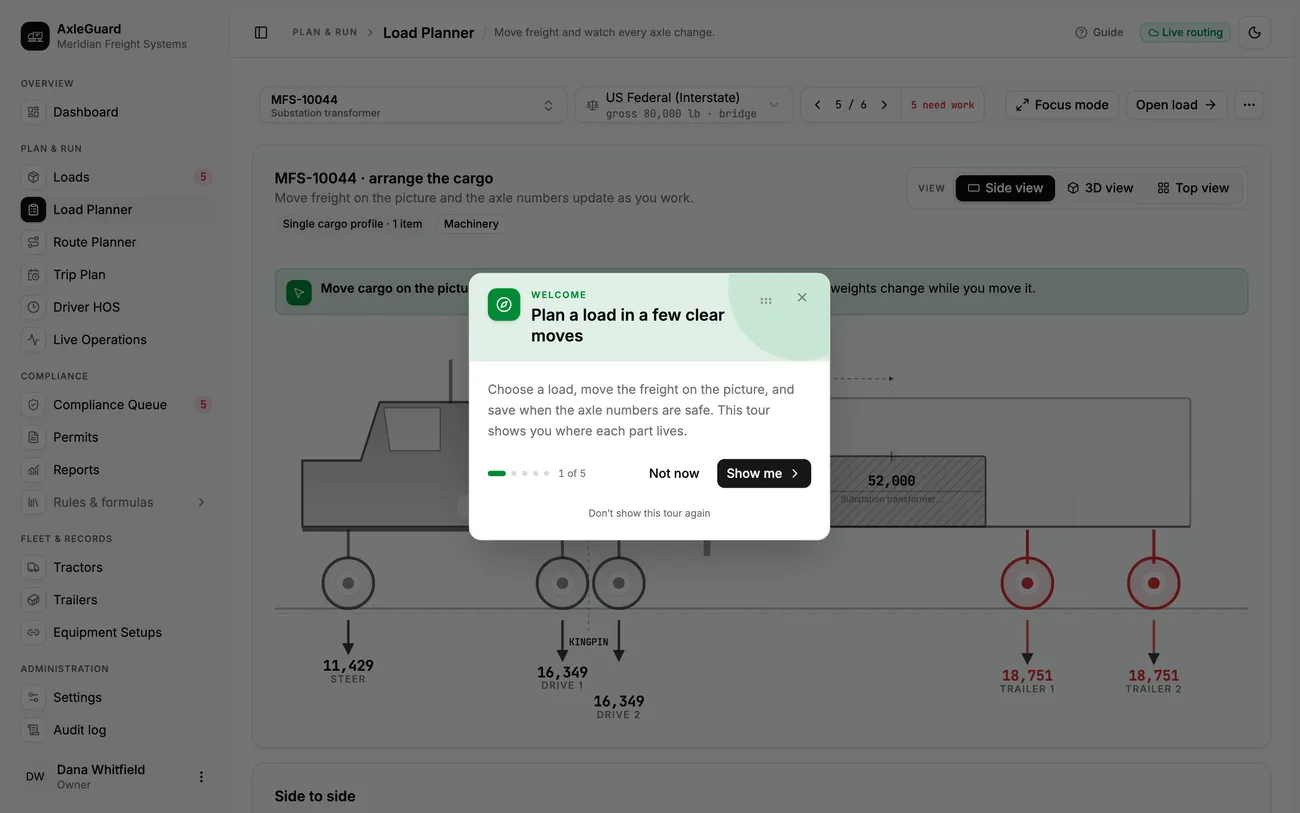
A tractor-trailer is not a container on a scale. It is a set of supports, and the freight on the deck is shared between them according to where it sits.
A load can sit 8,000 lb under gross and still be written up.
Two supports, one lever
The trailer rests on the kingpin at the front and its own tandem at the back. Anything you put on the deck is divided between those two points in proportion to how close it is to each one. Freight near the nose loads the kingpin, and the kingpin sits on the tractor's drive axles. Freight near the doors loads the trailer tandem instead.
The total never moves, so the total never warns you
Slide the whole load forward three feet and the gross weight is identical to the pound. What changes is which group carries it. That is why a bill of lading cannot catch this: the only number it holds is the one number that does not change.
The correction is small and specific
On a van with a sliding tandem, each hole of travel moves a few hundred pounds between the drive group and the trailer group. Experienced planners carry a rule of thumb for their own trailers and are usually right. The arithmetic is exact for a given trailer, and it is different for every trailer, which is why a rule of thumb eventually meets a load it does not fit.