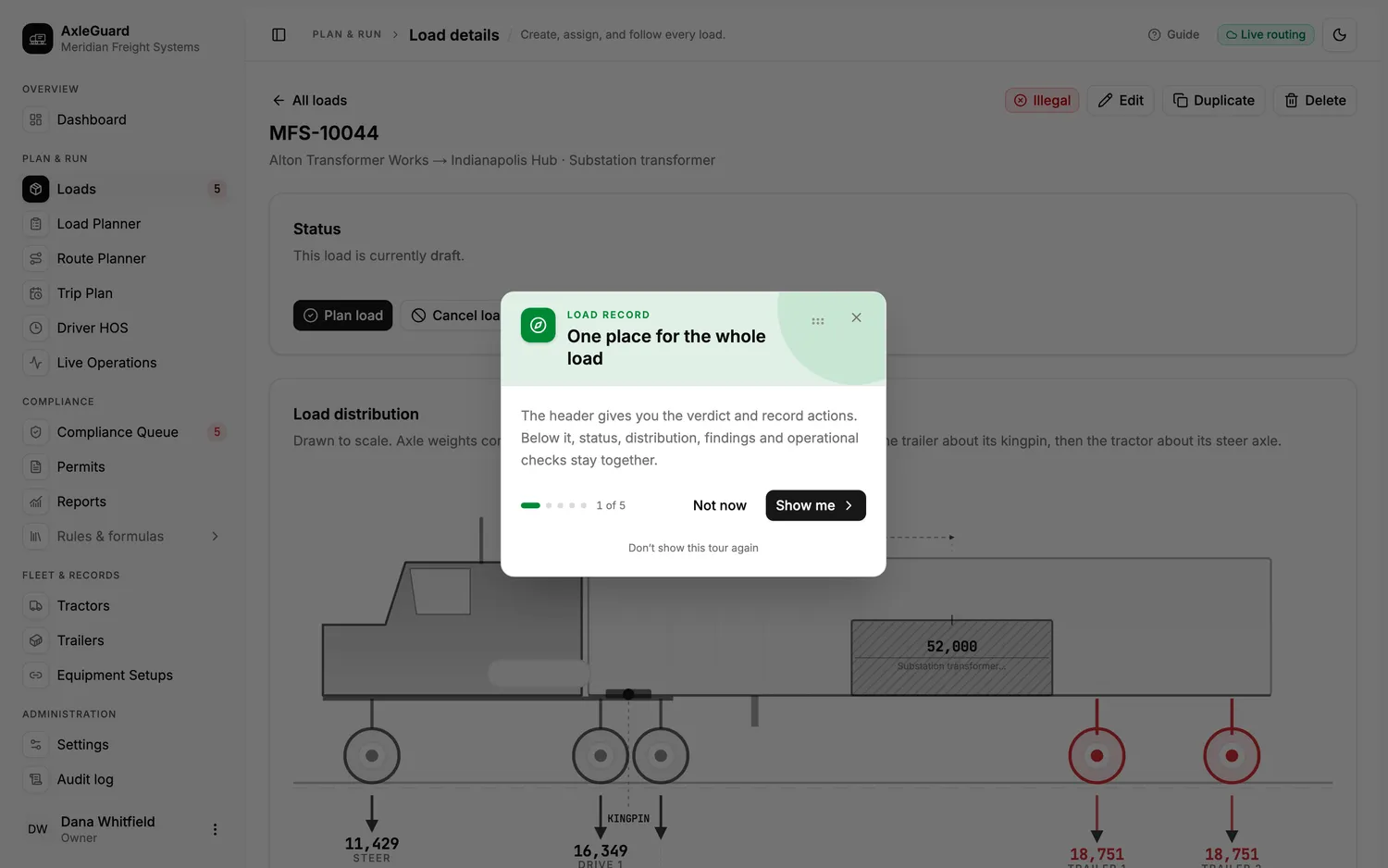
One gross weight hides the distribution
The order can be under 80,000 lb and still require a different cargo position or trailer configuration.
For brokers and 3PLs
Turn shipper paperwork into an equipment-aware load check. See what must be confirmed with the carrier before the rate, appointment and route become commitments.
Where the current process breaks
The order can be under 80,000 lb and still require a different cargo position or trailer configuration.
“Dry van” does not describe axle geometry, slider travel, ratings or usable deck space.
Truck restrictions, stops and driver hours can make a plausible appointment impossible.
The workflow
Capture item weight, dimensions, pickup and delivery sequence.
Check whether the load can be positioned legally on the intended combination.
Use truck dimensions, weight and restrictions instead of a passenger-car line.
Send the carrier the equipment and assumptions that still require confirmation.
What changes
No invented savings figure. These are the changes the workflow is designed to produce and the claims you can test during rollout.
Find equipment, axle and route conflicts before a carrier accepts.
Share the load assumptions and route rather than a bare gross weight.
See which rule, restriction or missing input needs attention.
The carrier still verifies equipment, current rules and the final operating decision.
Drag the freight. Watch the axles move.
The equipment model the physics needs.
A road that fits the truck, and a load that passes the scale on it.
Give a customer the current plan without giving them the workspace.
Good fit when
Not what this page promises
Questions
A broker can validate the plan and expose missing information. The operating carrier remains responsible for its equipment, permits and legal movement.
No. Read-only sharing can carry the planned load and questions to a carrier without giving them editing access.
No. It complements tendering and dispatch systems by checking the physical freight and route those records do not calculate.
Evaluate it with evidence
Keep the process you use today beside it. Resolve every disagreement before the result is used operationally.